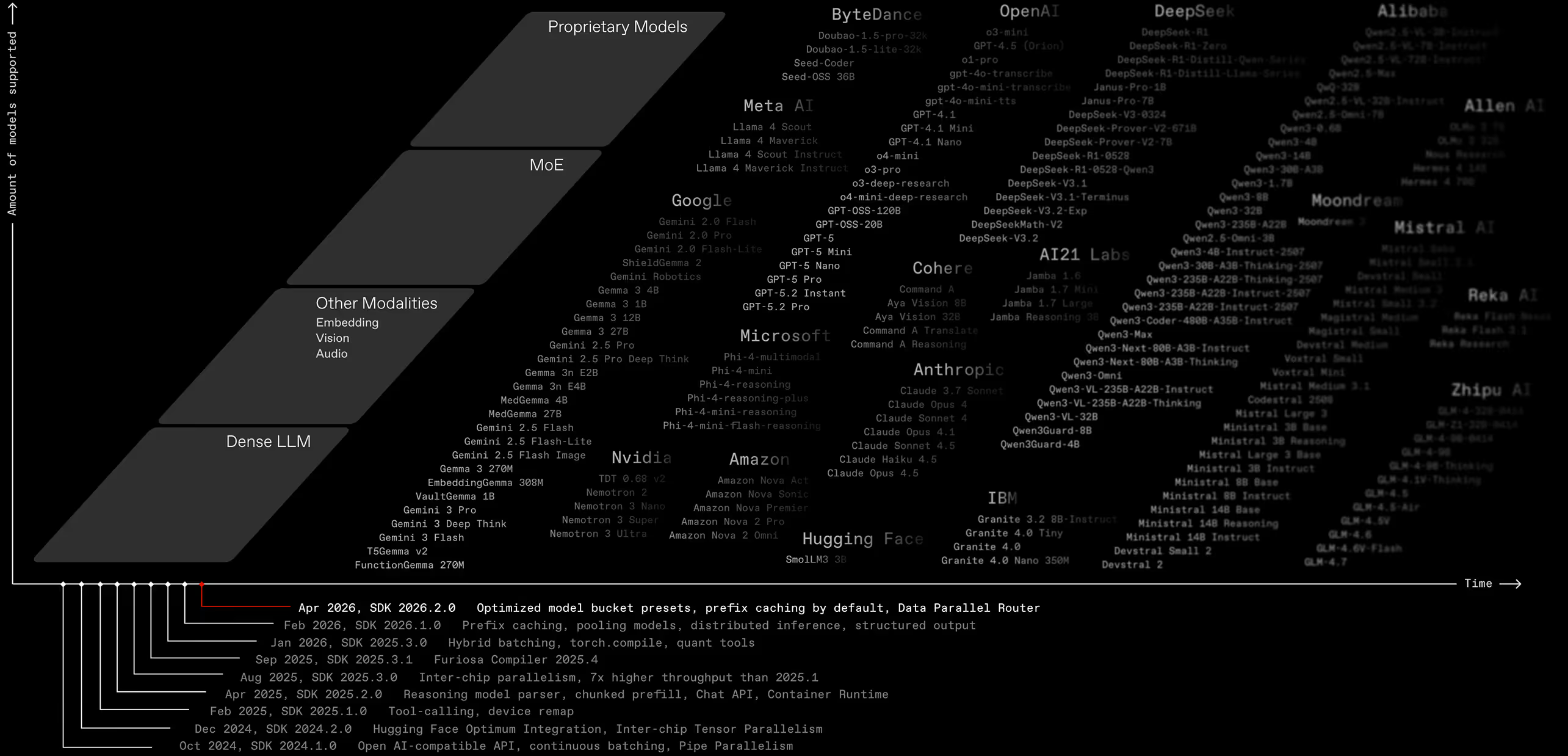
FuriosaAI software platform roadmap showcasing support for leading AI and LLM ecosystems, including OpenAI, Anthropic, Google, Meta, DeepSeek, Alibaba, and Mistral models, alongside continuous SDK advancements in inference optimization, parallelism, reasoning workloads, and scalable AI deployment.
Furiosa Software

The software stack activating RNGD performance

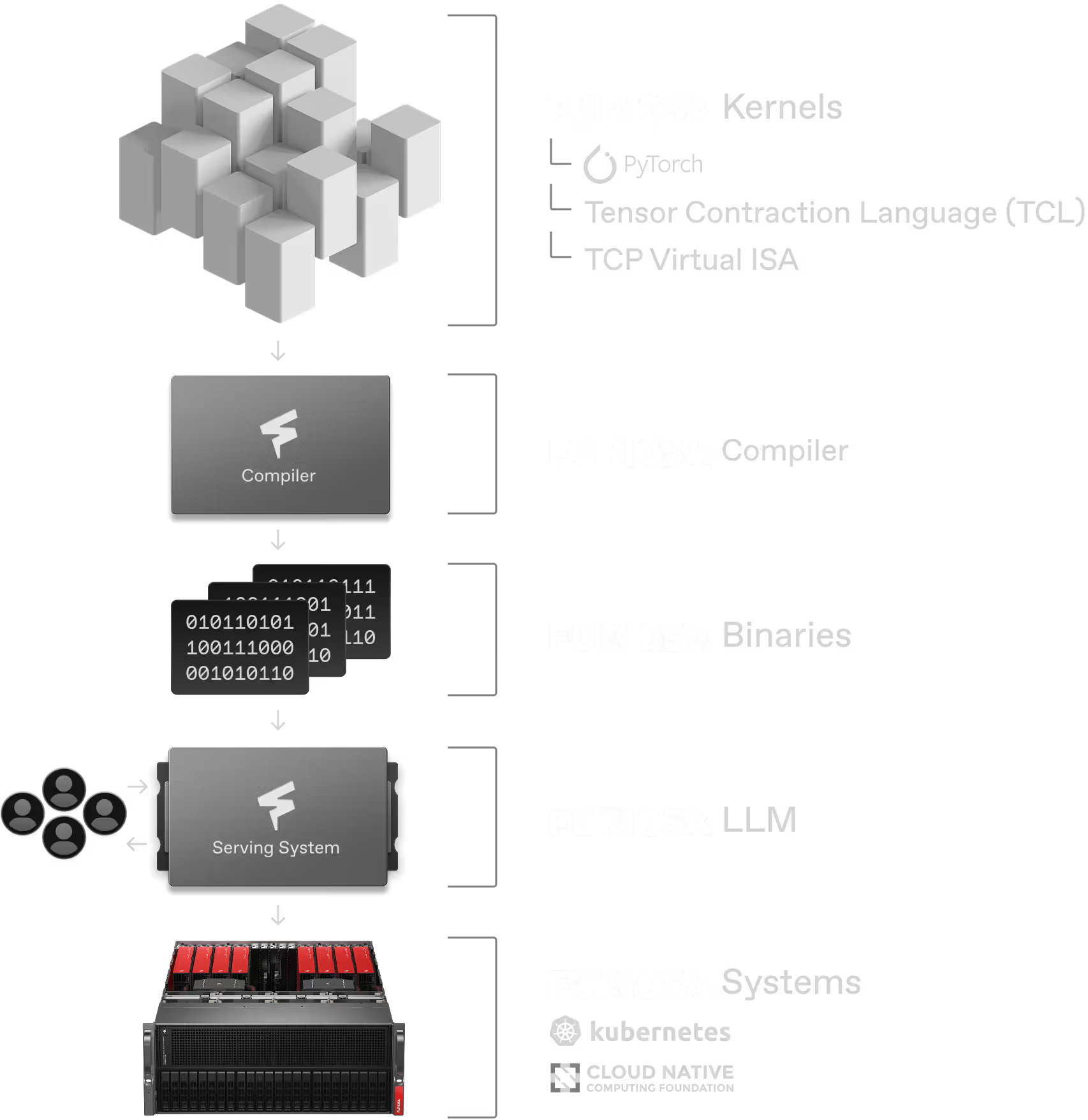
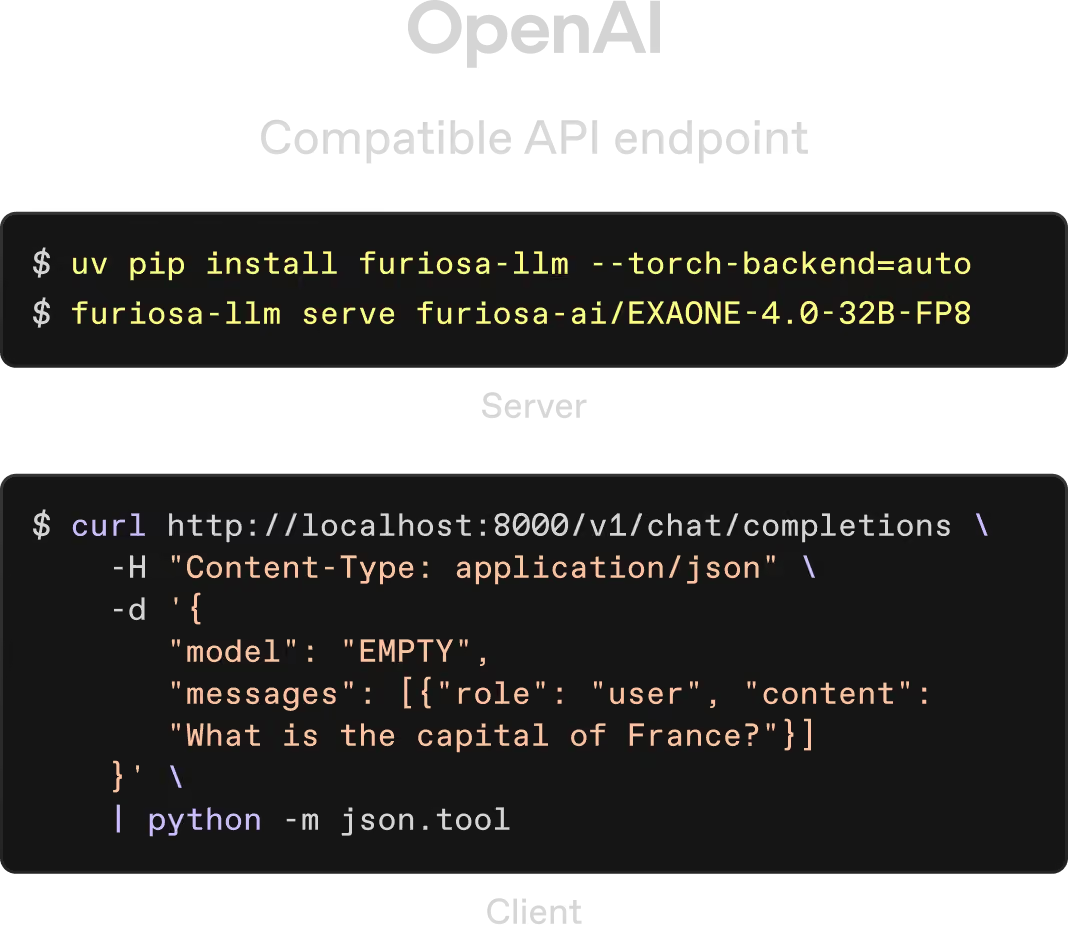
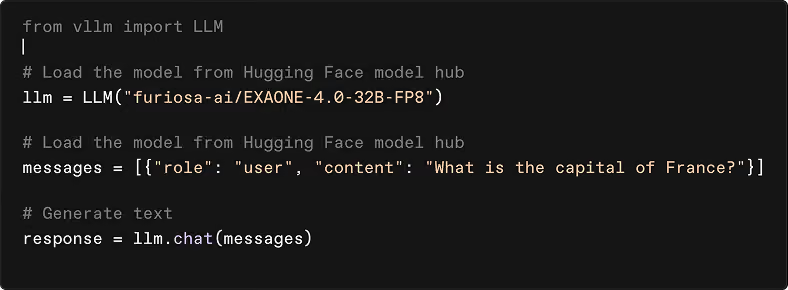
FuriosaAI’s full-stack AI software platform integrates PyTorch, Tensor Contraction Language, compiler optimization, binary generation, LLM serving infrastructure, and Kubernetes-based deployment to deliver efficient AI inference from model development to production-scale systems.
A unified software stack and execution environment engineered to map complex neural networks directly to silicon. Build, optimize, and scale models with predictability across Furiosa hardware.

Radical efficiency across compilation and execution

Our software optimizations span the entire lifecycle of inference, combining ahead-of-time compilation with high-efficiency runtime serving systems to maximize your infrastructure density.
Global optimization via holistic search

High-throughput, low-latency scheduling

The GPU bottleneck: Intractable search spaces

Conceptual graphic showing matrix multiplication optimization, highlighting the two key challenges of GPU performance tuning: memory allocation and instruction selection and scheduling. Colored indicators distinguish memory management tasks from execution scheduling requirements.
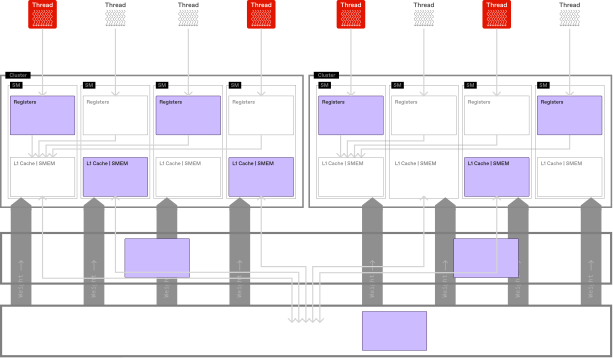
Diagram illustrating GPU architecture with multiple threads, registers, shared memory, cache layers, and HBM memory. Highlighted regions represent memory allocation and instruction scheduling across processing units, demonstrating the complexity of optimizing data movement and execution for AI workloads.
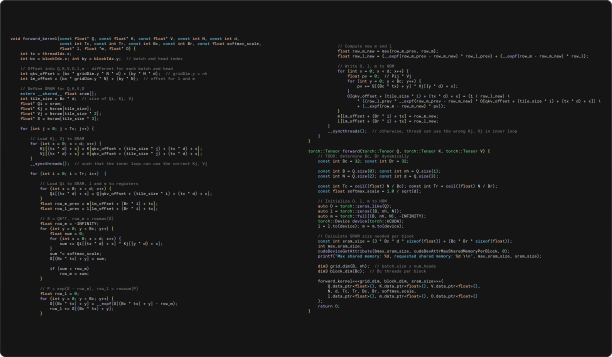
Screenshot of low-level GPU kernel source code used for AI computation, showing memory management, tensor operations, synchronization logic, and performance optimization routines required to execute machine learning workloads efficiently.
Traditional general-purpose GPU architectures rely on an unconstrained execution paradigm that forces compilers to guess the optimal paths for multi-dimensional tensor workloads. Because the hardware execution remains fundamentally fluid and non-deterministic, the compiler is forced into an intractable search space, relying on brittle, hand-crafted heuristics and manual kernel tuning to achieve peak utilization. This structural mismatch leaves hardware underutilized.

The tensor-native advantage: Global optimization via shapes and tactics

Conceptual diagram showing FuriosaAI’s optimization framework for tensor operations. Matrix multiplication is optimized through two key dimensions: memory allocation using tensor shapes and instruction selection and scheduling using execution tactics, balancing data placement and compute efficiency.
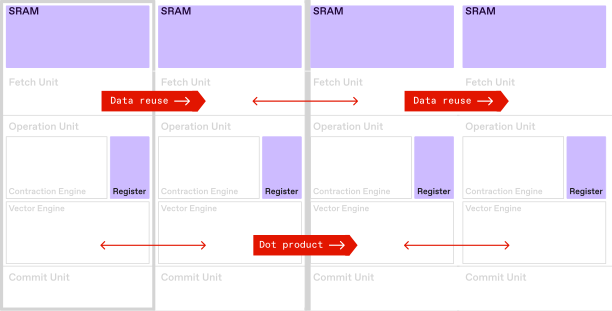
Diagram of FuriosaAI’s Tensor Contraction Processor (TCP) architecture featuring distributed SRAM blocks, fetch units, contraction engines, vector engines, registers, and commit units. Arrows illustrate data reuse and dot-product execution across processing elements, highlighting efficient data movement and parallel computation.
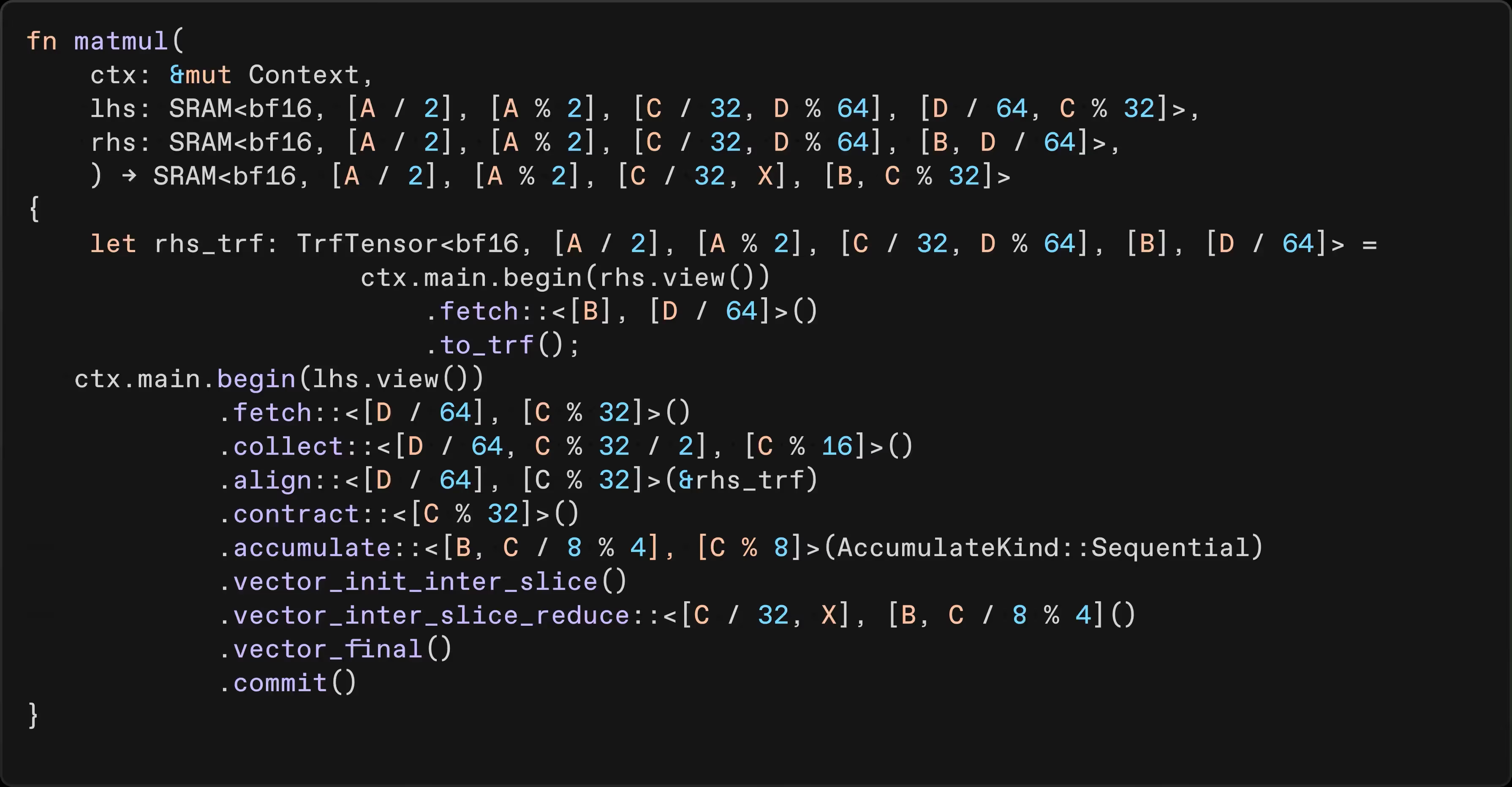
Screenshot of FuriosaAI Tensor Contraction Language (TCL) code defining a matrix multiplication operation. The code demonstrates hardware-aware tensor mapping, memory allocation, data fetching, contraction operations, accumulation, reduction, and execution scheduling for optimized AI inference workloads.
By co-designing our software stack alongside a first-principles Tensor Contraction Processor (TCP) architecture, we eliminate compiler guesswork. The predictable, structured nature of the silicon gives the compiler full architectural visibility into memory allocations and instruction scheduling. Using structural shapes and execution tactics, the compiler evaluates a clean, bounded search space to automatically generate globally optimized execution graphs.

TCP advantages: Accurate cost model for compiler optimizations

Visualization of FuriosaAI TCP’s deterministic execution model compared with traditional GPU architectures. The graphic highlights predictable low-latency AI inference, reduced performance variability, and consistent execution behavior that improves reliability for production-scale AI workloads.
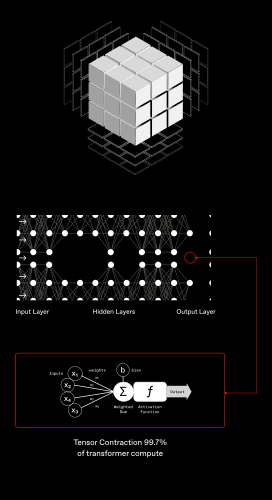
AI architecture diagram showing tensor contraction as the primary computational workload in transformer models, linking tensor data structures, neural network layers, and weighted activation functions used in modern AI inference.
The ultimate measure of a computing platform in the era of AI is how it performs under production-scale environments for the inference needs of enterprises. While legacy GPU architectures suffer from volatile execution paths that introduce massive tail-latency spikes, our tensor-native compiler leverages a mathematically precise hardware cost model to guarantee absolute execution determinism. As shown in the performance distribution, workloads execute with a tight, predictable latency profile. This elimination of tail-latency allows enterprise infrastructure teams to maximize service density, packing concurrent workloads tightly within fixed power envelopes without risking strict operational SLAs.

Reference applications available on GitHub
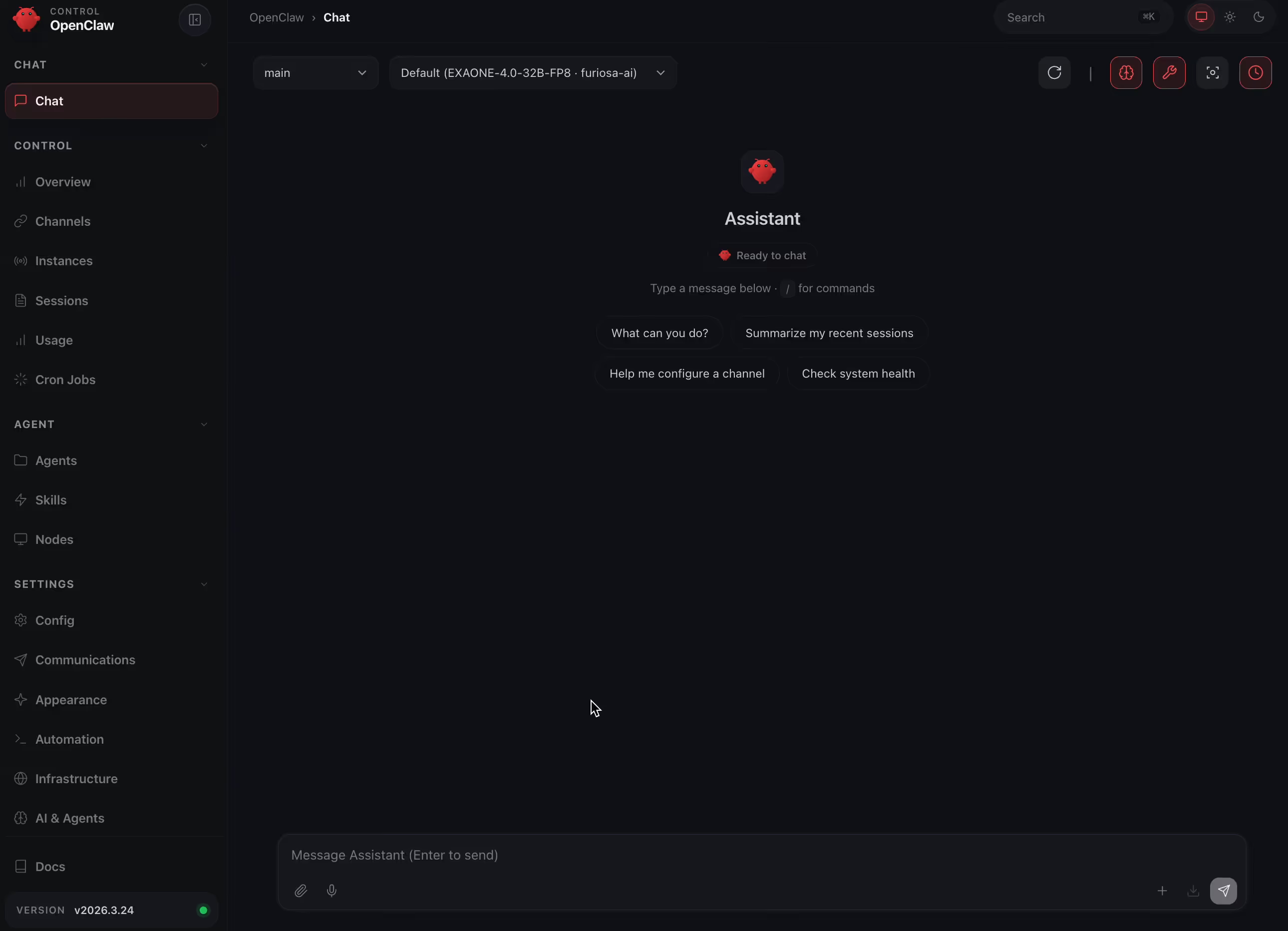
Agent
RAG system

Blog

Experience RENEGADE Summit 2026

News
Experience RENEGADE Summit 2026
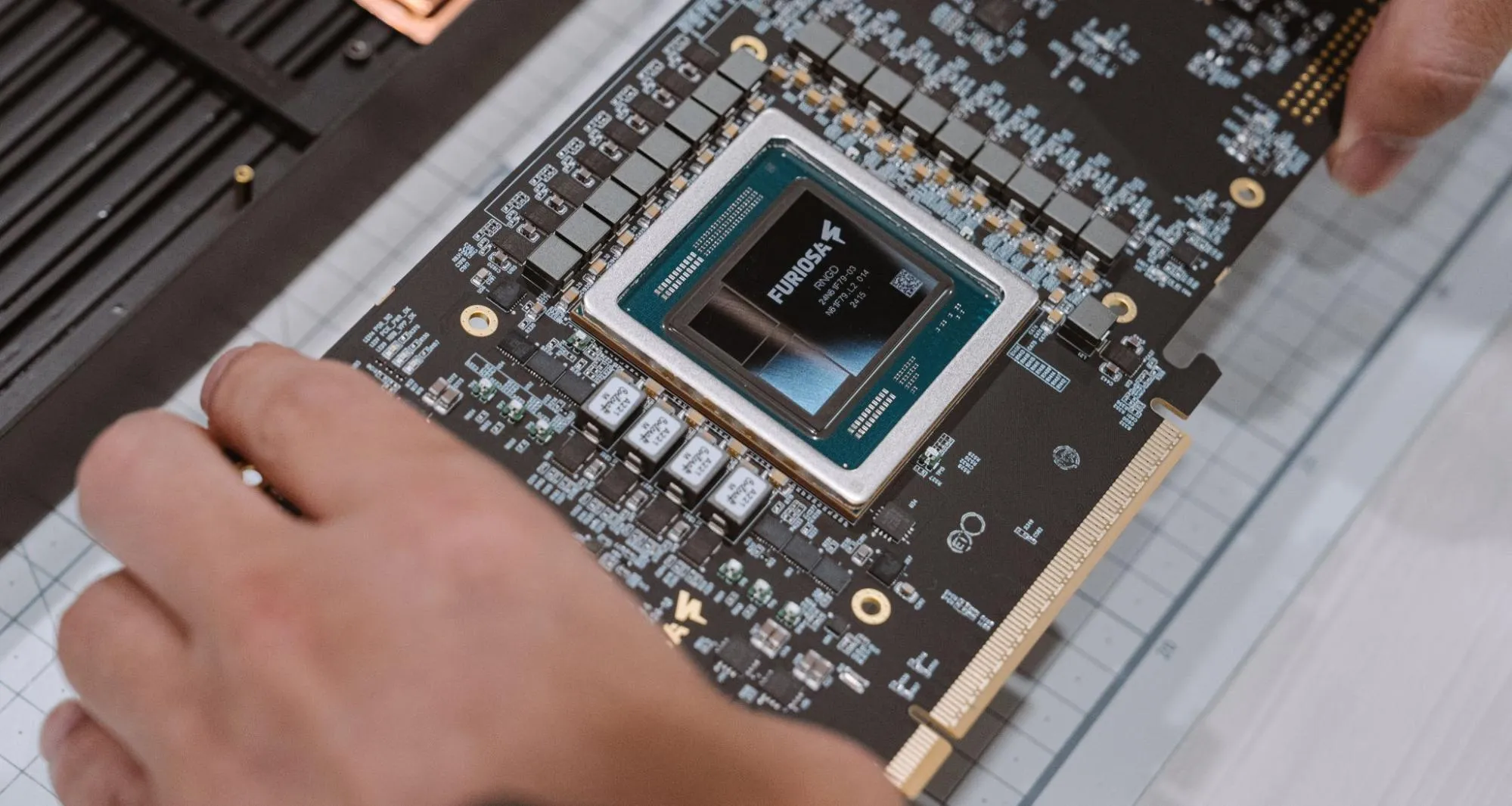
RNGD outperforms RTX Pro 6000 with the latest SDK

Technical Updates
RNGD outperforms RTX Pro 6000 with the latest SDK

RENEGADE 2026 Summit: Key announcements and highlights from our global partner ecosystem

News
RENEGADE 2026 Summit: Key announcements and highlights from our global partner ecosystem