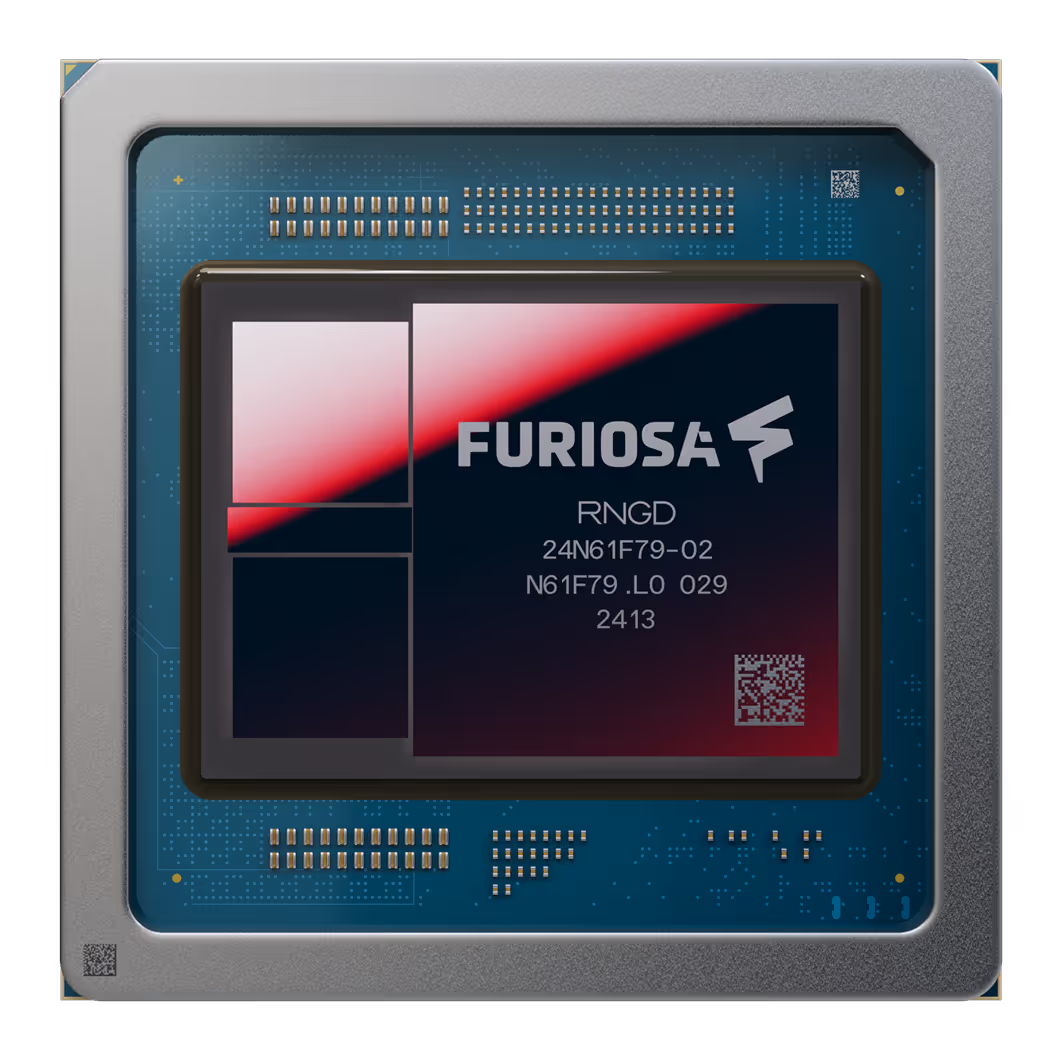
Generate more tokens per watt
Tensor Contraction Processor, architected in the shape of AI
OUR APPROACH
A computer architecture built around how AI models compute
Clean-slate design for the AI era
We didn’t adapt a GPU or a CPU. We built the architecture AI inference actually needs, with the freedom to reshape memory, compute and control around it.
Tensor contraction: the highest useful abstraction for AI
The primitive operation in every AI model is a tensor contraction. We built the chip around that. The hardware looks like the model, not like a grid of threads or a matrix-multiply unit.
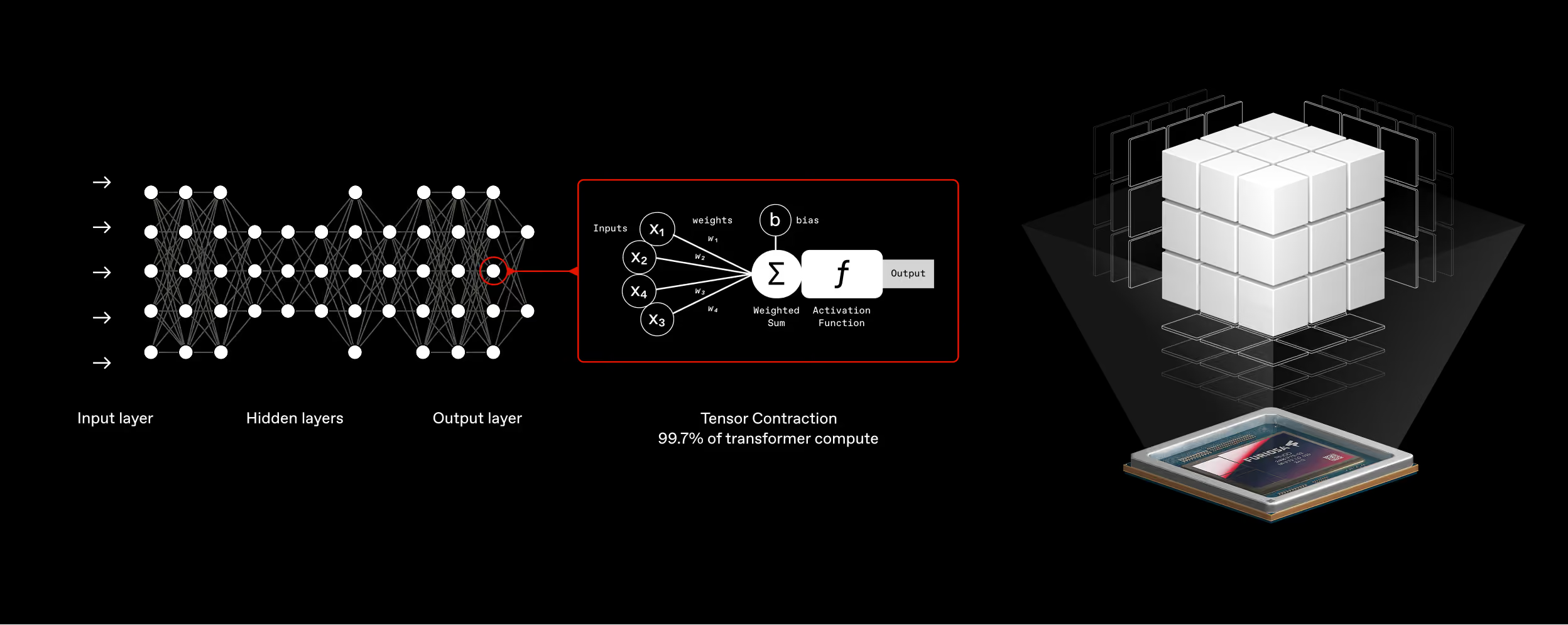
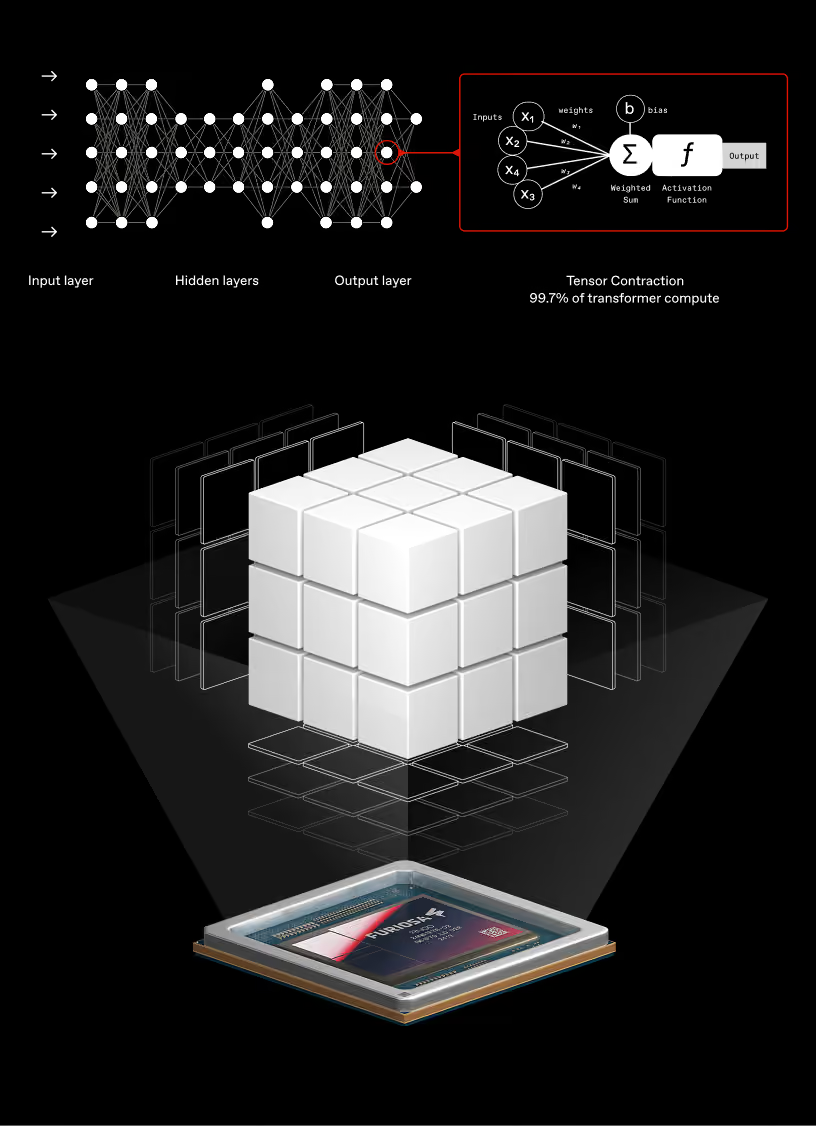
Hardware becomes efficient
Because the silicon executes whole contractions, operands stay put and data barely has to move.
Software becomes programmable
Because the silicon speaks the model’s own abstraction, the gap between model and hardware nearly closes.
HARDWARE
A high-level abstraction makes hardware efficient with less data movement and flexible dataflow
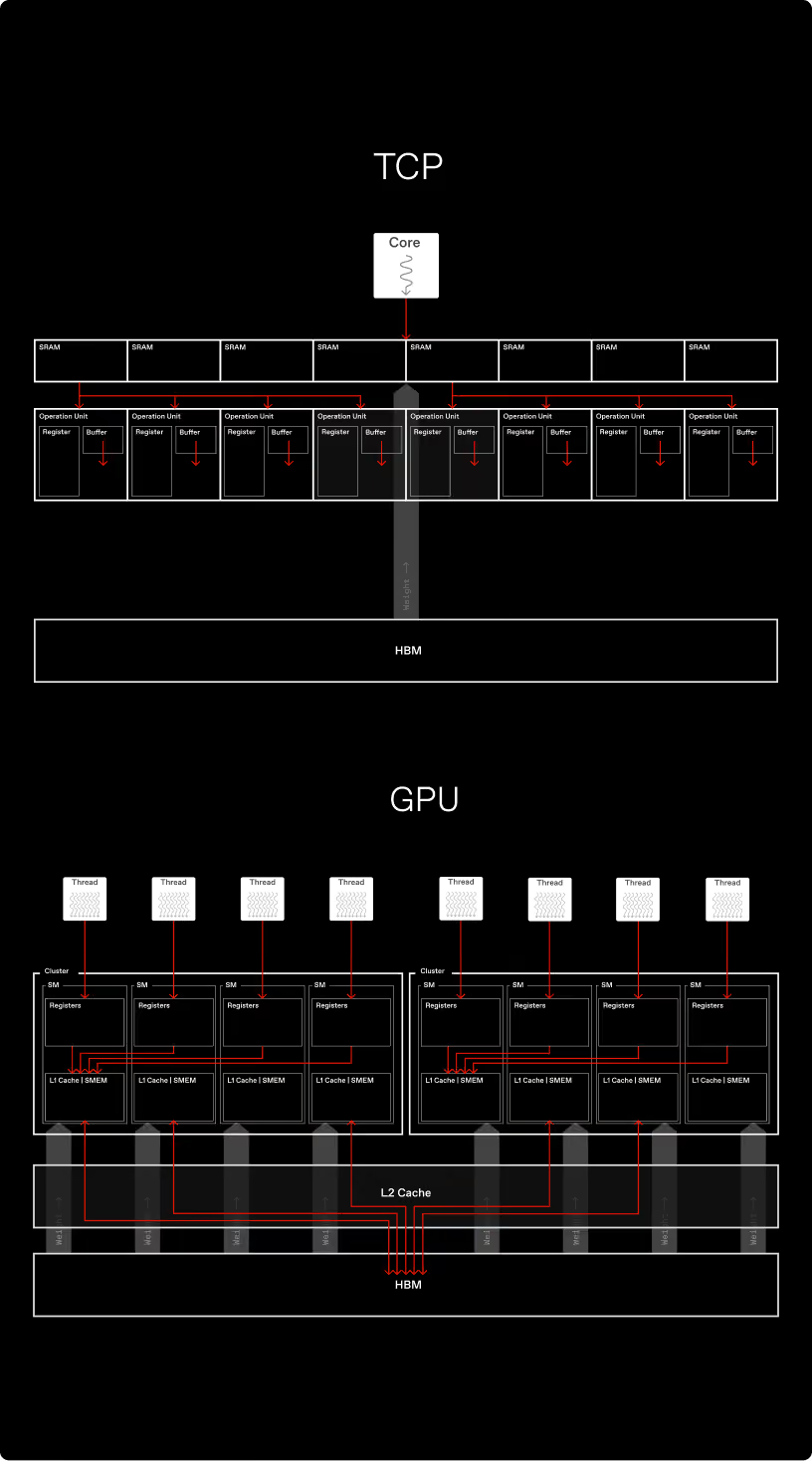
DATA LOCALITY
Less data movement, higher utilization
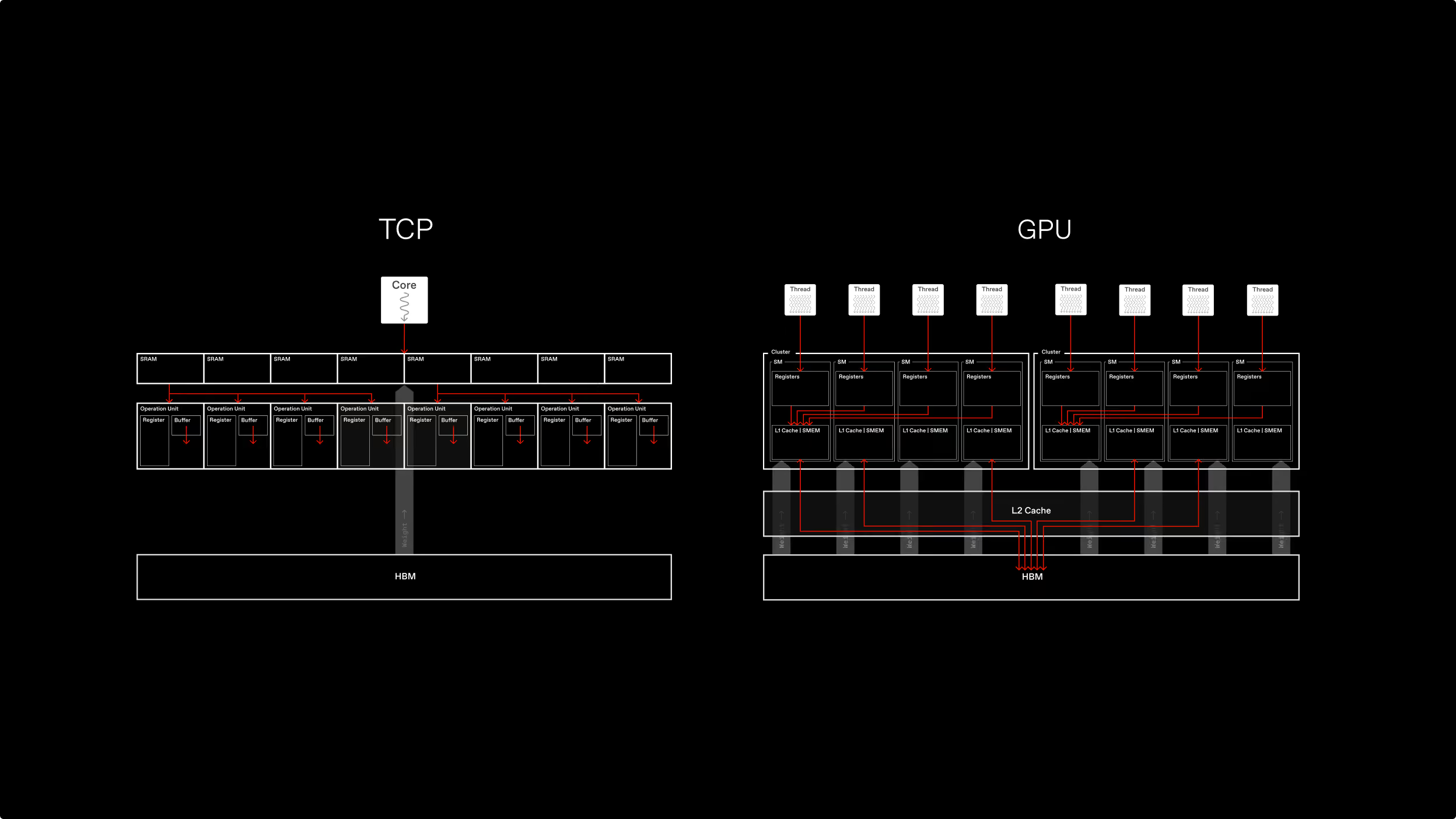
In production inference, data movement is the biggest lever on performance per watt. On GPUs, fixed 2D execution grids mean the software stack keeps reshaping and shuffling data across caches and register files, which adds latency and power.
The TCP runs multi-dimensional operations directly on-chip, keeps data in local SRAM, and minimizes movement to and from memory.
DATAFLOW
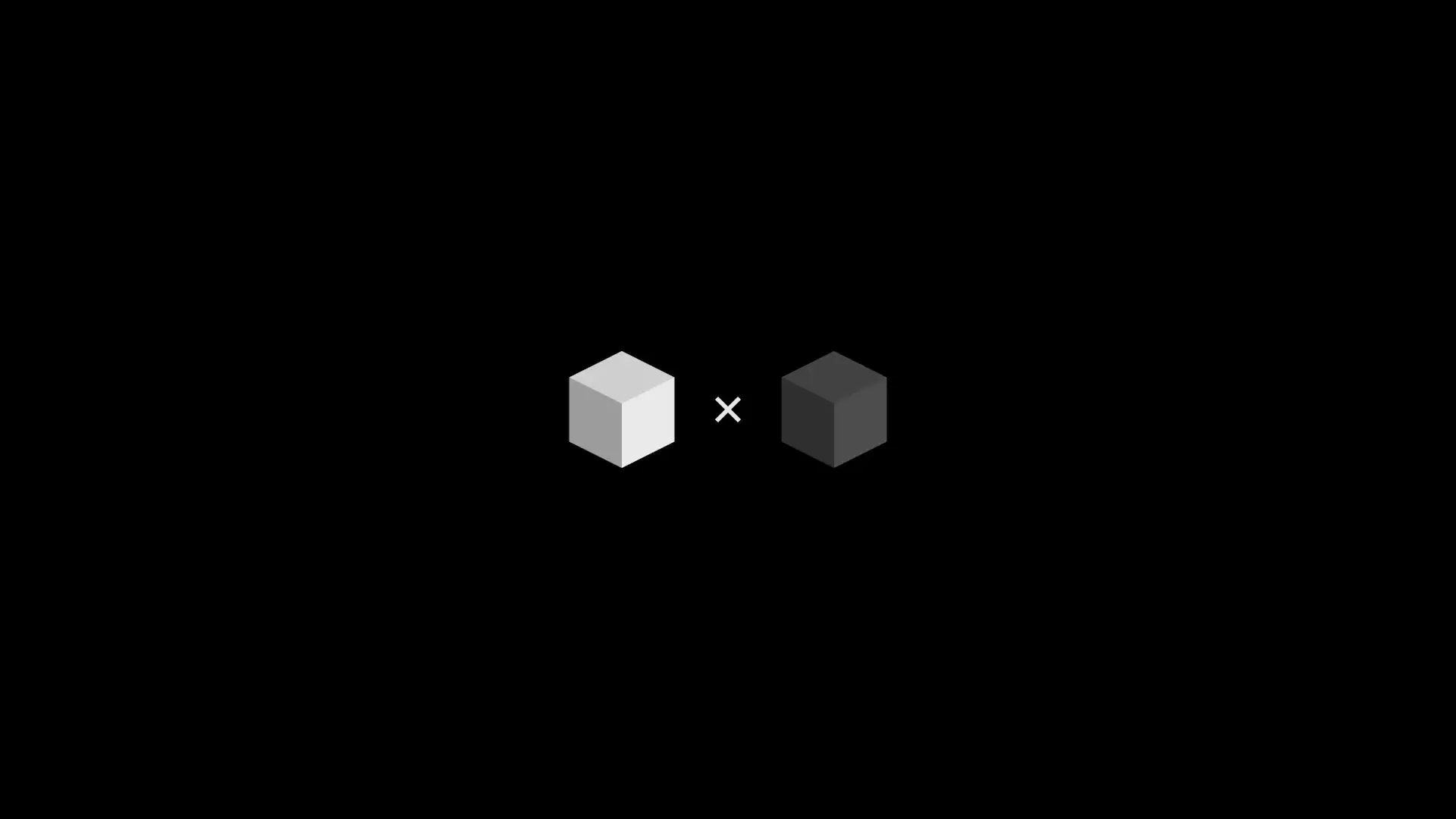
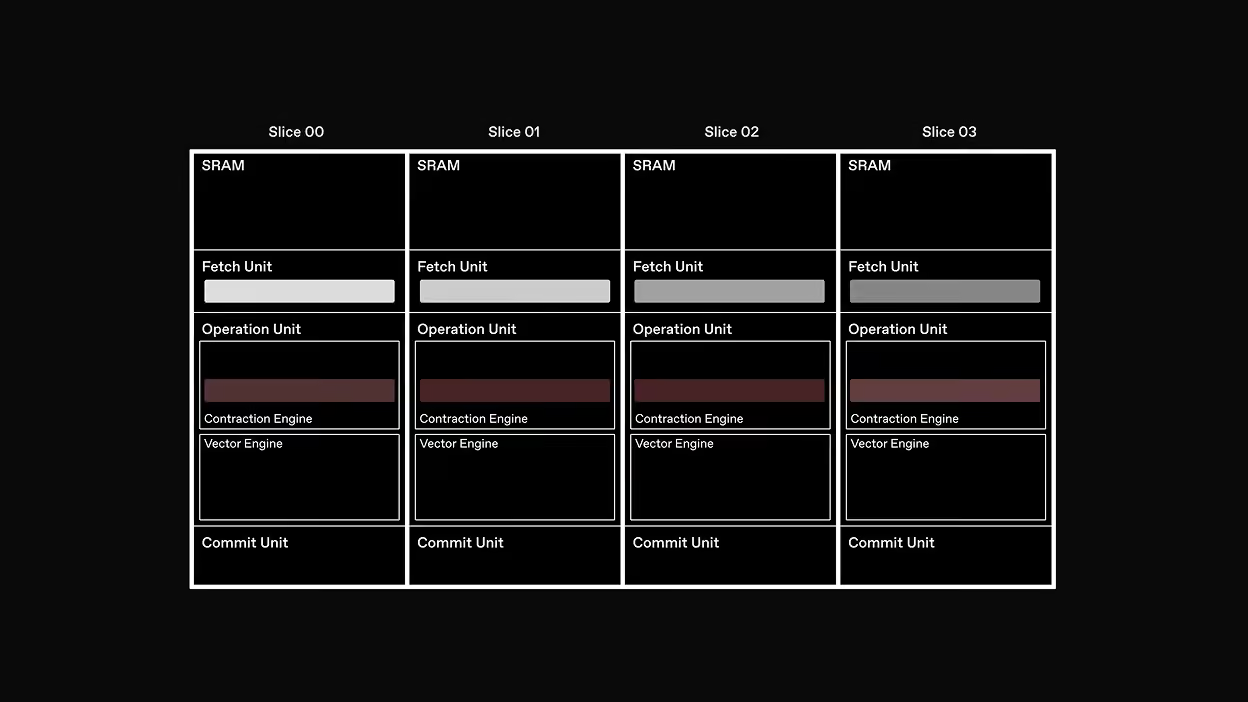
Flexible dataflow adaptation for diverse tensor shapes
Fixed-size systolic arrays such as Tensor Processing Units (TPUs) deliver high density but are bound to rigid, fixed-dimension physical systolic arrays built for uniform matrix multiplication. When subjected to the highly variable, asymmetric tensor shapes characteristic of production inference, these rigid grids suffer from massive structural under-utilization and bubble injection.
The TCP redefines generality through micro-architectural plasticity, deploying flexible execution units anchored by fluid dot-product primitives. By integrating these primitives directly inside the compute blocks, the hardware exposes multiple physical pathways for data flow. The compiler can dynamically configure these lanes to modify data-reuse vectors in real time, maintaining peak hardware utilization across diverse tensor layouts.
SOFTWARE
A high-level abstraction makes software easy to program and optimize
@tcl.tensor_operation
def e8m0_to_f32(e):
    bits = tcl.operation.shl(e, 23)
    return tcl.commit(tcl.operation.reinterpret_as_float(bits))


@tcl.tensor_operation
def mxfp4_quantized_einsum(
        w_f4, x, scale, lut, contracted_axes, reduce_axes, output_axes
    ):
    w = tcl.fetch.table_lookup(w_f4, lut)
    acc = tcl.operation.contract(w, x, contracted_axes=contracted_axes)
    acc = tcl.operation.mulf(acc, scale)
    y = tcl.operation.reduce(acc, axes=reduce_axes, op=tcl.Addf)
return tcl.commit.permute(tcl.commit.typecast(y, tcl.bf16), output_axes)@tcl.kernel
def mxfp4_matmul(
x: tcl.bf16[M, Ko, Ki],
w: tcl.f4_e2[N, Ko, Ki],
scale: tcl.u8[N, Ko]
) -> tcl.bf16[M, N]:
L = tcl.Axis(16)
f4_to_bf16_table: tcl.bf16[L] = tcl.vector(
[0.0, 0.5, 1.0, ..., -6.0]
)
scale_f32 = e8m0_to_f32(scale)
return mxfp4_quantized_einsum(
w, x, scale_f32, f4_to_bf16_table, [Ki], [Ko], [M, N]
)PROGRAMMING INTERFACE
Easy to lay out mathematical intention, easy to optimize
Lay out the math in code
The TCP matches the mathematical expression of the workload directly in silicon, treating the tensor operation as a first-class citizen. When you want finer control, TCL and vISA give you kernel-level access.
Let the compiler fit it to the hardware
Because hardware executions on the Tensor Contraction Processor are predictable, the compiler plans memory allocation and instruction scheduling ahead of time and searches a bounded space of shapes and tactics. New models run well without hand-written kernels.
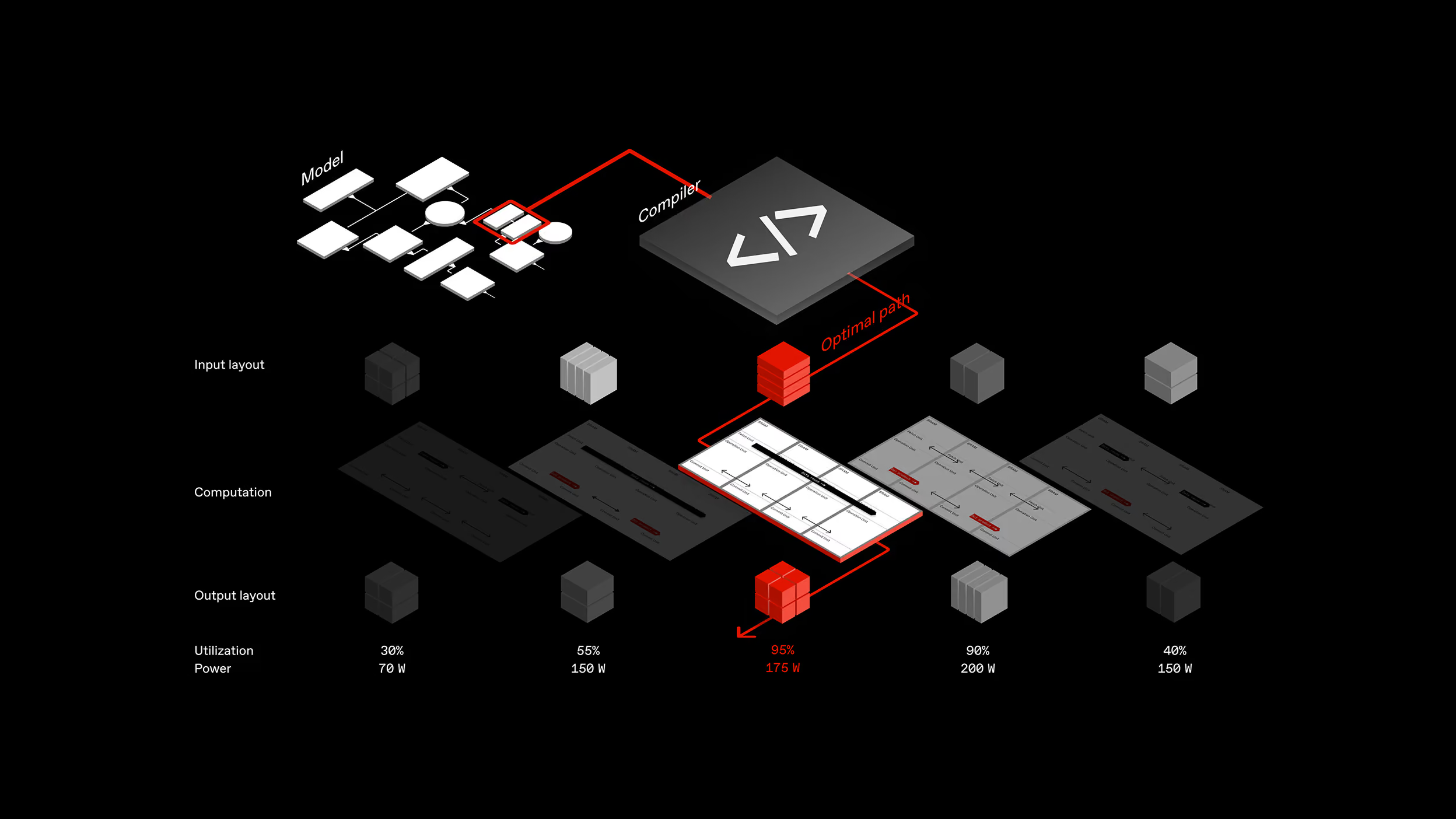
COMPILER
Driving global compiler optimization
Eliminating runtime data orchestration overhead requires an architectural contract that substitutes dynamic hardware scheduling with static, compile-time layout optimization. Legacy architectures introduce hardware-controlled caching and dynamic thread scheduling, creating non-deterministic execution behaviors that force the compiler into reactive mitigation.
On the TCP, execution is structured and predictable, so parallelism and data routing can be planned at compile time. The Furiosa Compiler treats the whole network graph as one optimization problem and minimizes data movement end to end.
SWEET SPOT FOR INFERENCE
A rigid trade-off
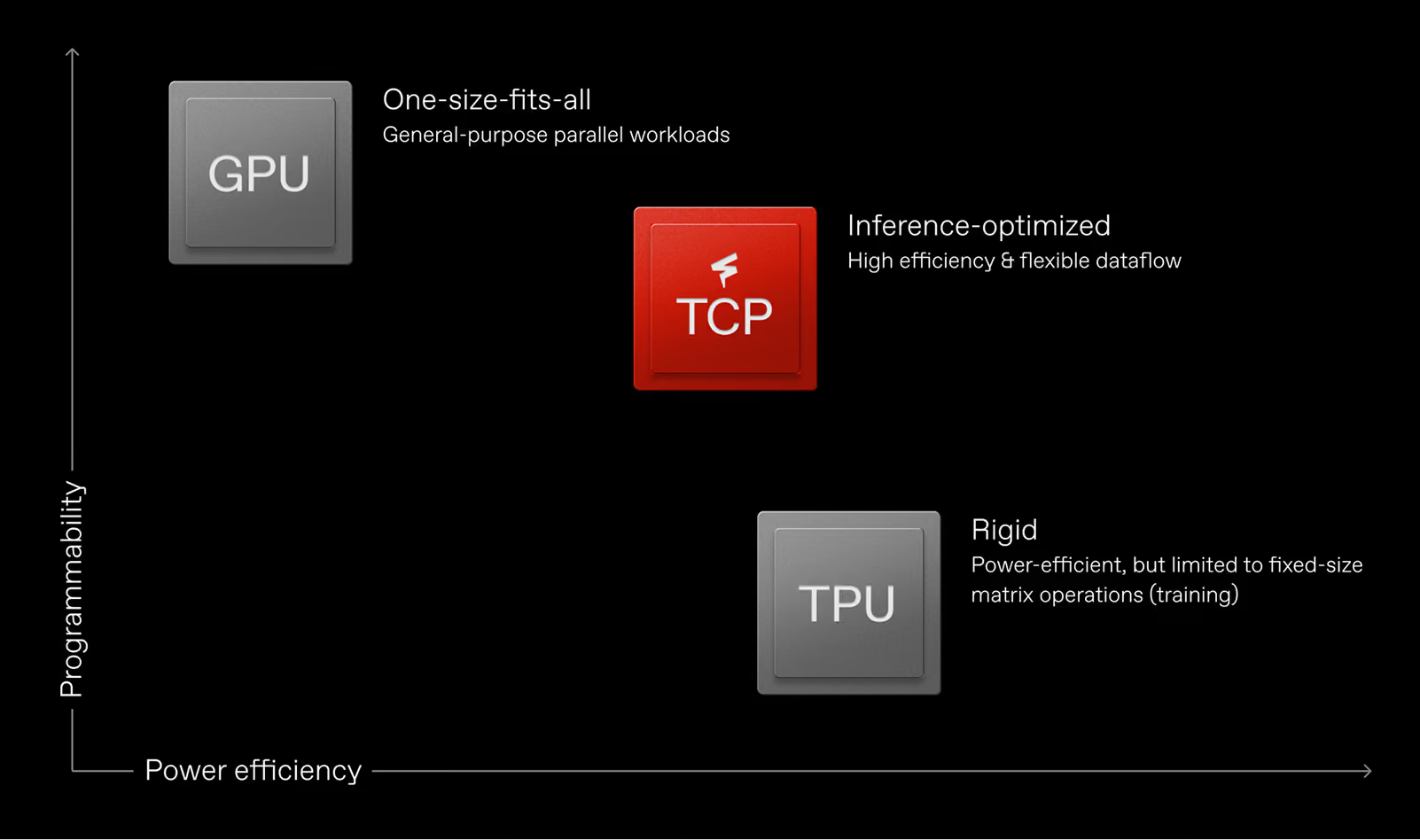
Chip design has long traded one thing for another: GPUs are general but spend energy on control and data movement; fixed-function arrays are efficient but rigid.
Built for tensor contraction
The Tensor Contraction Processor sits between the two: programmable enough for changing models and agentic workloads, and efficient because it runs tensor contraction natively. By mapping the higher-dimensional geometry of the tensor directly onto the silicon, the TCP unifies software-programmable dataflow generality with the deterministic power efficiency of dedicated primitives.
TCP serving AI workloads today
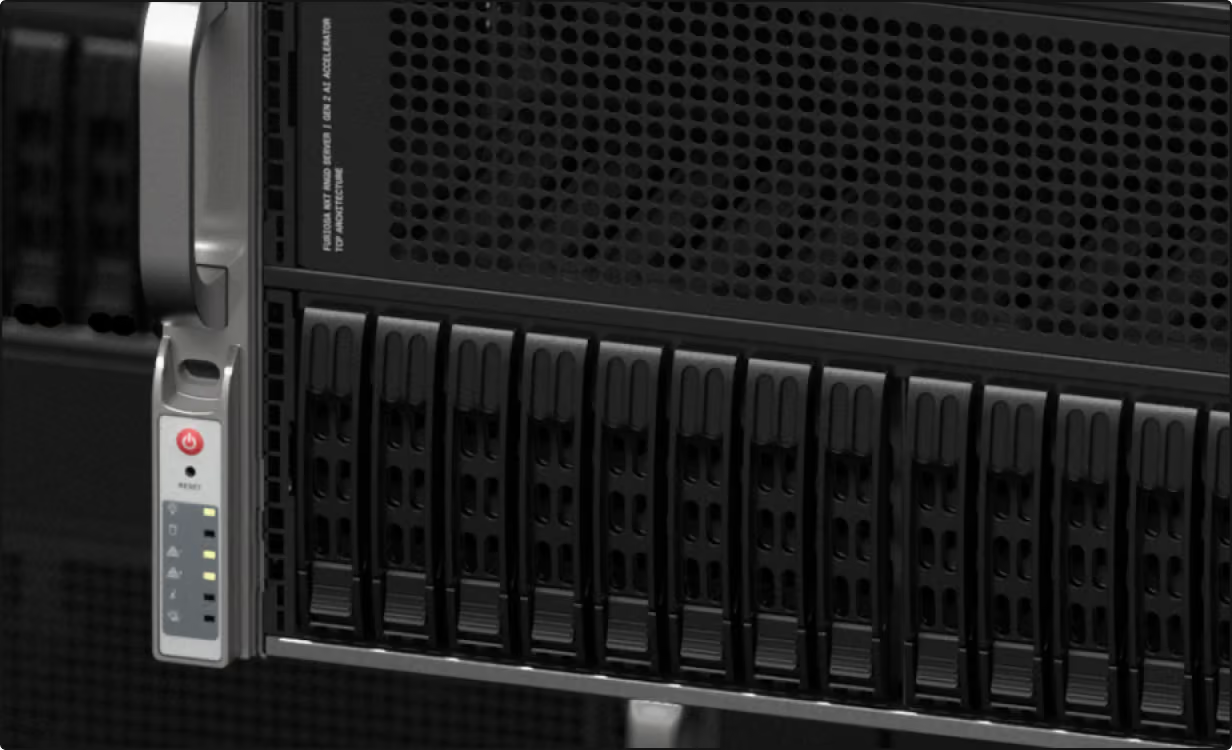
Serving a 100B-Class Model at 128K Context: Production Traffic on One of Korea’s Largest Portals
FOUNDATION MODEL
INTERNET PORTAL
SUMMARIZATION
Read the Upstage customer story
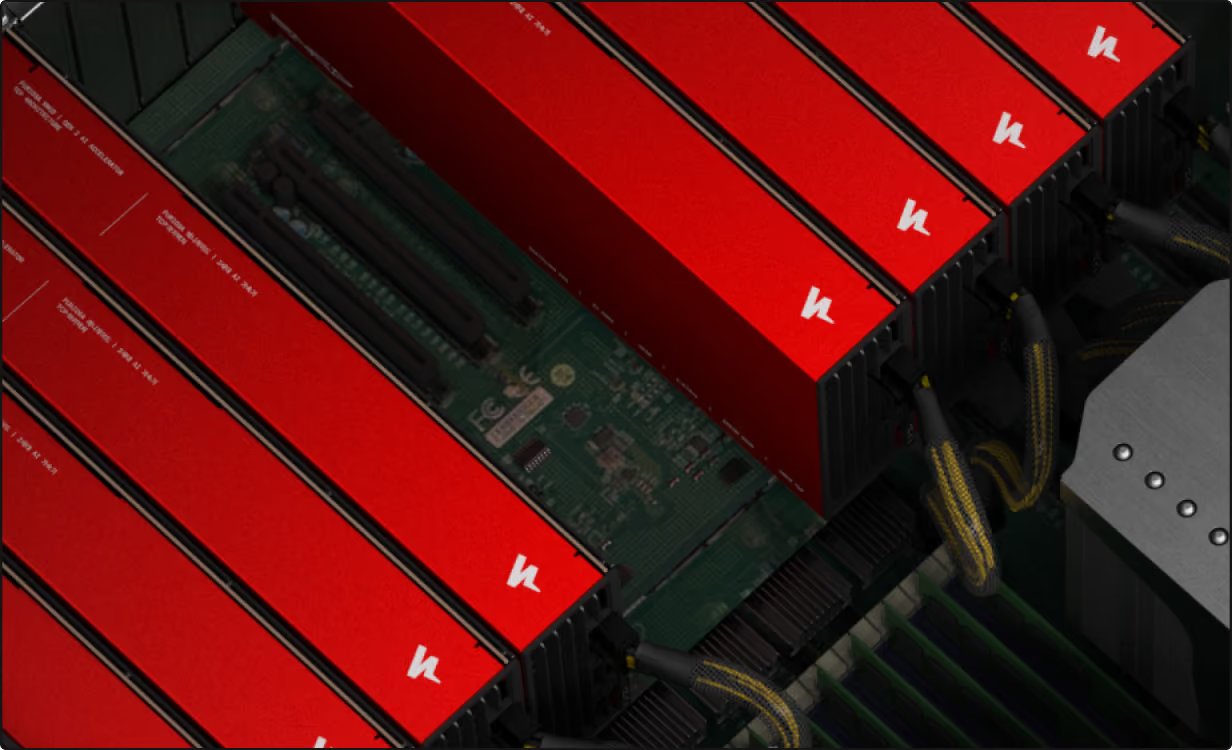
Scaling Frontier-Class AI at the Edge with 40% Lower TCO
ENTERPRISE
EDGE
ON-PREM MODEL SERVING
Read the customer story
Dive Deeper
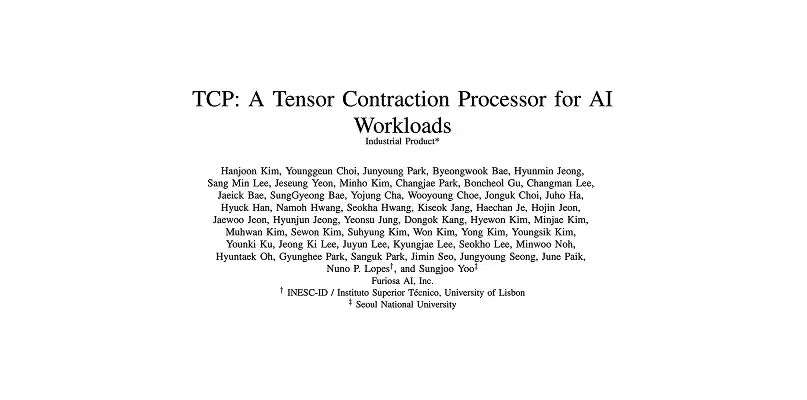
TCP paper, ISCA 2024
Download the peer-reviewed architecture paper.
Download the TCP paper

Keynote: hardware and software design philosophy
Our CTO and CRO go deep on why the primitive is a tensor contraction and what that does to the compiler.
Watch the keynote

Hot Chips talk by CEO June Paik
The full RNGD presentation from Hot Chips 2024.
Watch the Hot Chips talk
